
Advice from a Waterproofing Company on Staten Island
Basement water problems often look more obvious than they really are. A puddle near one wall may begin with a window well, a grading problem, a foundation crack, a clogged drain, or roof runoff landing too close to the structure. In Staten Island, older foundations, tight side yards, sloped lots, paved surfaces, and heavy coastal rain can all affect how water reaches a basement.
Before waterproofing begins, an inspection should identify the water entry point and the condition driving it before discussing any solution. That process matters because waterproofing companies Staten Island property owners evaluate should be separating symptoms from causes, not moving from a wet spot to a generic repair. The strongest inspection process connects interior staining, wall-floor joints, cracks, sump activity, grading, roof drainage, paved areas, and site conditions into one diagnostic picture.
Water Entry Points the Inspection Should Identify
The first purpose of a basement inspection is to separate where water appears from where it enters. Moisture visible on one wall may have traveled from a crack several feet away, a poorly sealed utility penetration, or the joint where the slab meets the foundation. A stain, drip line, mineral deposit, or damp patch should be treated as evidence within a larger pattern rather than as an isolated symptom.
Possible entry point | What the inspection should evaluate |
Wall cracks | Vertical, diagonal, or stair-step openings that allow seepage during rain or soil saturation |
Floor-wall joint | Moisture entering where the slab meets the foundation wall, often linked to hydrostatic pressure |
Window wells | Water collecting outside below-grade windows and entering around frames, seals, or deteriorated masonry |
Foundation penetrations | Gaps around pipes, conduits, vents, or service lines where sealing has failed |
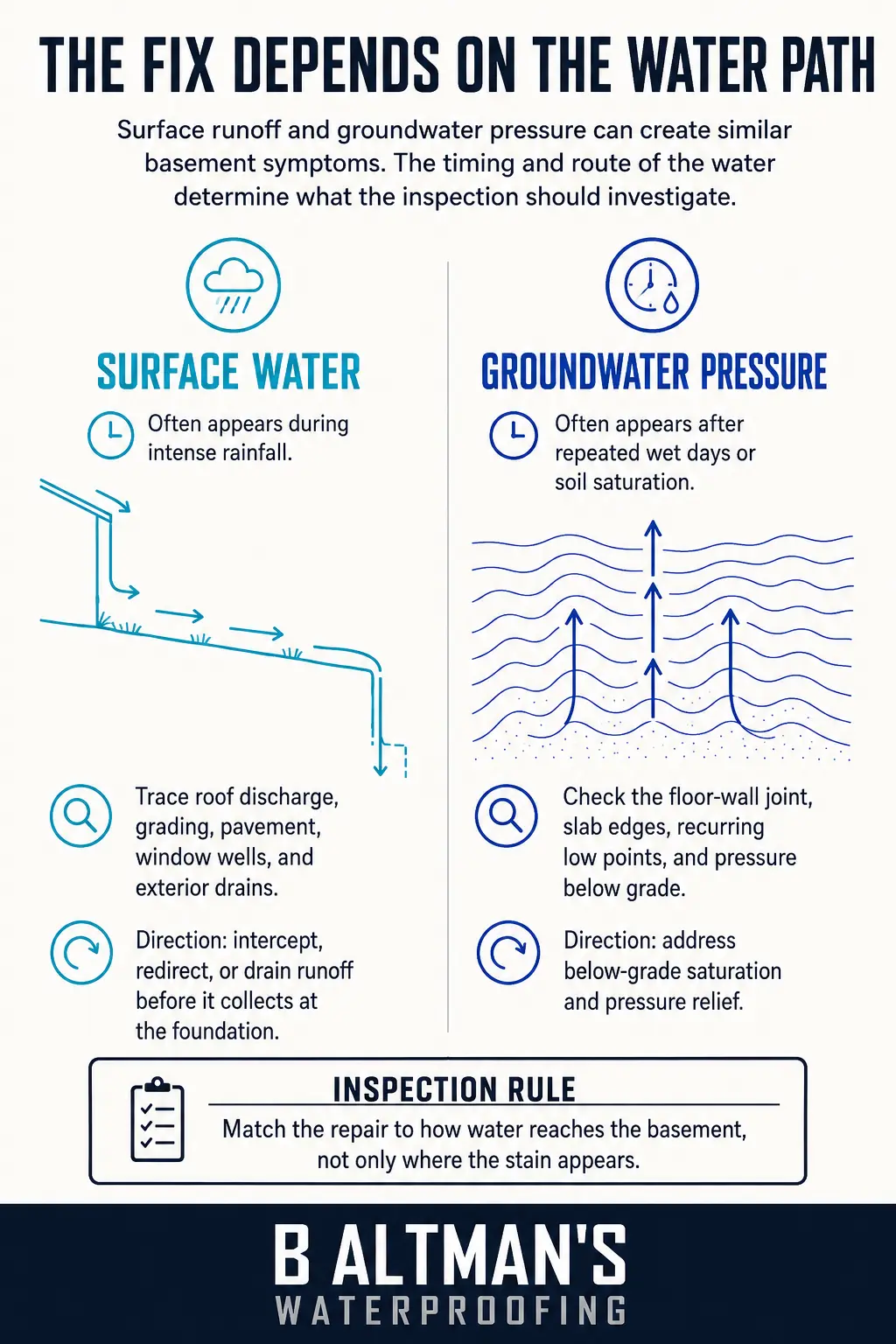
Exterior water movement also matters because the interior leak may be the final stage of a longer drainage path. Runoff can travel across pavement, collect in low soil areas, spill from gutters, or sit against foundation walls before it becomes visible inside. A reliable inspection traces that movement backward so the proposed waterproofing direction addresses the condition feeding the seepage.
Exterior and Drainage Conditions That May Drive Basement Water
Exterior stormwater movement matters because basement moisture often begins outside the structure before it appears on an interior wall or floor. During a basement inspection, drainage conditions help explain whether rainfall is being carried away from the foundation or concentrated beside it. Roof runoff, surface slope, soil settlement, paved walkways, driveways, and tight side yards can all influence how much water presses against below-grade walls. This is also why stormwater handling should be viewed as a building-system concern rather than only a landscaping detail. As context, NYC Plumbing Code Chapter 11 addresses storm drainage requirements for properties in the city. In §1101.2, the code requires roofs, paved areas, yards, courts, and courtyards to drain to a separate storm sewer, combined sewer, or other approved disposal location consistent with DEP requirements. For inspection purposes, that reinforces the practical question of whether stormwater is being directed toward vulnerable foundation areas instead of away from them. The inspection remains diagnostic, however, and should not be treated as a formal code determination.
- Negative grade sloping toward the foundation
- Downspouts discharging too close to basement walls
- Gutters overflowing beside the structure
- Settled soil creating low pockets near the foundation
- Hardscape directing runoff toward window wells or entries
These conditions become more important after heavy rain, snowmelt, or repeated storms that keep surrounding soil saturated. When water remains beside the foundation, pressure can build against the wall, and moisture may seek the easiest path inward through cracks, joints, porous masonry, utility penetrations, or the cove area where the wall meets the floor. A complete inspection connects those exterior clues with interior evidence such as efflorescence, damp framing, stained walls, or recurring puddles.
Interior Basement Conditions That Help Confirm the Source
Interior evidence helps confirm whether moisture enters through the foundation, rises from below the slab, collects because of indoor humidity, or comes from a plumbing-related condition. The location, texture, timing, and recurrence of each symptom can point toward a different cause. A damp lower wall after heavy rain suggests a different condition than a musty basement with no visible seepage. At the same time, a recurring wet spot in the same floor area may indicate a different path than broad condensation on cool surfaces.
Certain signs are especially useful because they separate active seepage from past moisture exposure. White mineral deposits on masonry can indicate water moving through concrete or block and leaving salts behind as it evaporates. Brown staining, peeling coatings, swollen trim, rusted metal, and softened materials can show how moisture has traveled and whether it is concentrated near a joint, penetration, or wall section.
- Moisture low on the wall or near the wall-floor seam after storms
- Puddles forming in repeat locations rather than randomly across the slab
- Damp storage, framing, insulation, or base materials along one basement side
- Elevated humidity, condensation, or odor when no recent rainfall occurred
Timing is one of the most important interior clues. If water appears after rainfall, snowmelt, or saturated soil conditions, the inspection should focus on how exterior water pressure reaches the foundation and where it enters. If wetness is continuous, appears during dry weather, or is isolated around mechanical equipment, fixtures, or supply lines, the diagnostic path should shift before considering waterproofing work.
What the Inspection Should Establish Before Waterproofing
A proper basement inspection should establish three things before discussing any waterproofing method: the visible entry point, the moisture condition driving that entry, and the site pattern that may cause the problem to return. That means evaluating wall and floor conditions, foundation openings, sump activity, grading, roof drainage, paved surfaces, and signs that stormwater is being directed toward the structure. The goal is not simply to name a repair, but to understand whether the issue involves seepage through a wall, pressure beneath the slab, water collecting near the foundation, discharge problems around the property, or another condition that appears only under certain weather patterns.
This diagnostic sequence creates a stronger basis for any next step. Basement waterproofing decisions are most reliable when they begin with the actual moisture path rather than the most visible symptom. Before waterproofing begins, the inspection should identify where water is entering and why that water is reaching the basement in the first place.
Related Reading