Most homeowners do not get upset because a basement feels imperfect. They get upset when water shows up inside the home, in the same places, under the same conditions, and the “fix” never feels final. That repeated behavior is not just frustrating; it is information. Repetition almost always points to a repeatable route.
A basement stays dry long-term when it is treated like a sealed vessel, meaning water is blocked at the points and routes it uses to enter, rather than being allowed in and pumped away. That standard forces the right question. Not “what can we do today,” but “what has to be blocked so this does not happen again when the same conditions repeat.”
The Rules for a Dry Basement
Basement waterproofing Staten Island gets expensive when the plan is built around tactics before it is built around requirements. Without requirements, almost any recommendation can sound reasonable in isolation. With requirements, the plan becomes testable.
- Stop The Route, Not the Symptom:The wet spot is often where the route shows up, not where it starts.
- No Gaps along The Route:If water is traveling along a seam or transition, protection has to be continuous along that line.
- Weak Spots Cannot Be Ignored:Penetrations, joints, and transitions can allow water to slip past an otherwise solid repair.
- It Has To Hold When Conditions Repeat:A plan that only works once is not a plan; it is a temporary improvement.
- The Plan Must Match What You Can See Inside:If the explanation cannot be tied to observable interior evidence, it is guesswork.
These rules matter because they connect directly to outcomes. A plan that meets them can be judged by performance, not promises.
What You Can Learn Just By Looking Inside
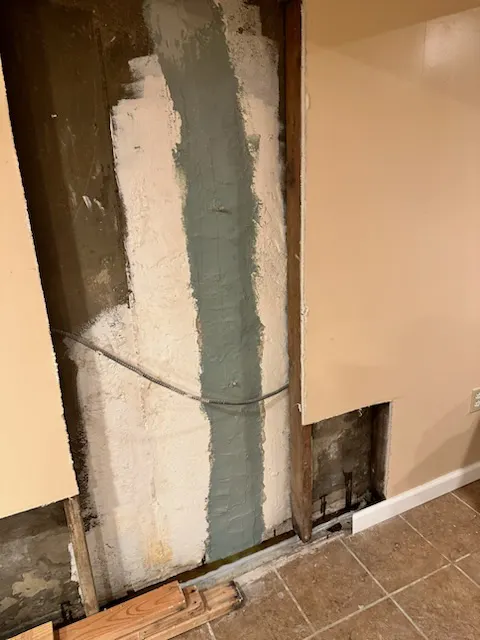
Once the goal is “keep water out,” the next problem is separating proof from confident storytelling. Two contractors can describe the same basement in completely different ways, yet the basement’s interior evidence remains the same. It tells you where moisture is appearing, how it behaves over time, and whether the problem is localized or spread along a route.
Interior evidence is valuable because it reflects how the basement is failing as a system. It helps separate “one spot needs a targeted fix” from “a route is active and needs continuous protection.”
Clues and What They Usually Suggest
White, Chalky Residue vs Dark Staining vs Active Dripping
- White, chalky mineral residue (often called efflorescence) commonly points to repeated moisture movement over time.
- Dark staining often points to recurring wetting and drying.
- Active dripping typically indicates an open route allowing water to flow.
One Wet Spot vs A Wet Line
- One wet spot often points to a localized defect or localized entry route.
- A wet line often points to a route along a seam or transition, where the visible wet area can shift.
How Fast It Shows Up
- Water showing quickly often suggests a more direct route.
- Water showing later can suggest it traveled along a route before it appeared inside.
Where It Sits On the Wall
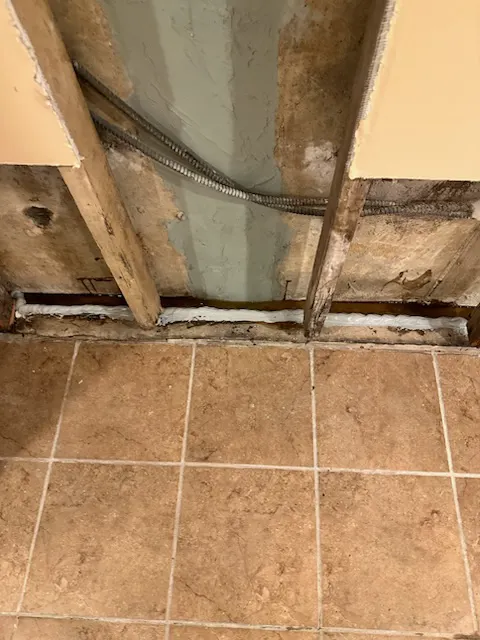
- Low patterns near the wall-to-floor junction often involve the seam where the wall meets the slab.
- Mid-wall wetness often suggests a different route than a floor-line seam issue.
Musty Air with No Puddles
- Persistent mustiness without standing water can mean the basement stays damp, which still damages finishes and stored items over time.
The objective is not to turn a homeowner into an inspector. The objective is to classify the problem correctly so the plan matches the route.
Where It Shows Up Vs How It Gets In
This is where most failed fixes begin. The visible wet area is easy to point at, photograph, and argue about. But water follows the path that offers the least resistance. If the route stays open, the basement can “look different” each time, even when the underlying problem is unchanged.
The wet spot you see is the show-up point, where the problem becomes obvious. The entry route is how water reaches that point. One route can create multiple show-up points, especially when it runs along a seam or transition. That is why a repair can look clean yet still fail to address the underlying problem. It fixed the show-up point, not the route. Once that distinction is clear, the repeat pattern stops feeling random. It becomes readable.
Pattern A: The Wet Area “Moves” Along the Same Wall
When the wet spot shifts along the same wall, the basement is usually not “changing problems.” It shows the same entry route in different places because water will appear wherever the interior resistance is lowest at that moment.
- What You Notice:One event it is near the corner. The next event it is a few feet over. Later, it shows farther down the same wall line.
- What It Usually Means:A route is active along a seam or transition, often the wall-to-floor line, and the wet area shifts to whichever point is easiest to break through.
- What Often Fails:Patching the current wet location while leaving the seam route active.
- What Holds:A continuous seal along the active route so the wet area cannot reappear in a new spot.
- Why This Fits the Sealed Vessel Standard:A seam route requires continuity. Without continuity, the basement is patched in spots instead of sealed as a system.
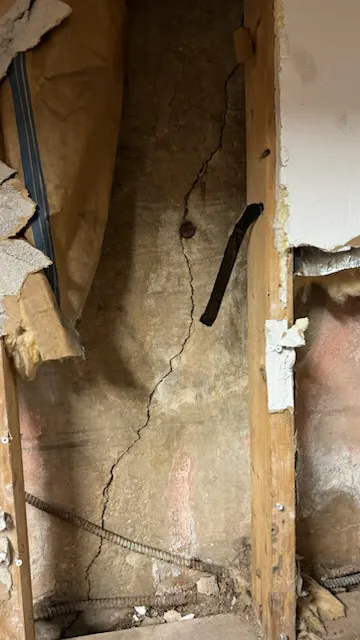
Pattern B: One Crack Leaks Only Under Specific Conditions
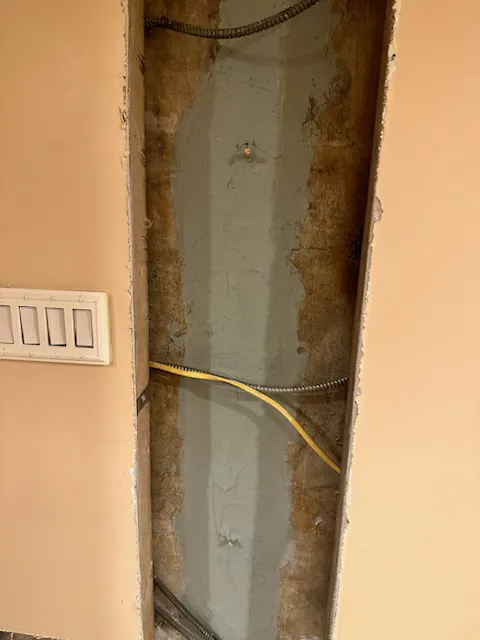
A single leaking crack can be a true point-entry problem, but it is also a common “show-up point” for water traveling along a bigger route. The deciding factor is whether the surrounding evidence stays quiet or whether the crack is just the most visible exit.
- What You Notice:A single crack shows water during certain storms or events. Other areas look normal.
- What It Might Mean:It might be a true localized entry problem. It might also be the first place water shows up from a larger route.
- How It Is Confirmed As Truly Localized: The wall-to-floor line remains inactive; other areas do not develop repeat wet zones; and the timing and surface evidence are limited to that crack.
- What Often Fails:Assuming every crack is a standalone problem without checking for a feeding route.
- What Holds:A targeted repair when the evidence supports a localized route, and a continuous plan when the crack is only a show-up point.
- Why This Fits the Sealed Vessel Standard:A sealed vessel plan treats the route as the problem and decides whether it is isolated or pathway-driven.
Pattern C: No Puddles, But the Basement Never Feels Dry
A basement can fail without obvious leaks if moisture is constantly present in the space. If finishes keep breaking down and stored items never feel safe, that is still a dryness failure, and it needs a diagnosis that separates seepage from humidity and condensation.
- What You Notice:No dramatic leak, but the basement smells musty. Items feel damp. Paint peels. Cardboard softens. The space never feels stable.
- How This Damages a Home:Stored items degrade, finishes fail early, and the basement stays unpleasant and harder to use.
- What Gets Checked:Whether the issue is seepage-driven or driven by humidity and condensation that keeps the space damp.
- What Often Fails:Treating it like seepage without confirming the route, or ignoring it because it is not dramatic.
- What Holds:A plan that targets the actual driver of dampness so moisture does not repeatedly take hold.
- Why This Fits the Sealed Vessel Standard:“Dry” is not only the absence of puddles. A basement that stays damp still fails as a protected interior space, and the fix has to match the cause.
If You Want a Basement That Stays Dry
A sealed vessel basement is not achieved by luck. It is achieved by matching the plan to what the basement proves, then judging success by repeat performance. When the focus stays on the route, and the work stays continuous where the route exists, the basement stops cycling through new wet spots and partial fixes.
Use this as a disciplined filter:
- Identify the repeating pattern, location, timing, and whether it is a line or a single spot.
- Decide whether it behaves like a localized leak, a seam route, or a dampness pattern.
- Demand a plan that blocks the route with no gaps and accounts for weak spots that can bypass the work.
- Judge success by repeat performance, not by how it looked the day it was done.
If the plan does not keep water out under repeated conditions, it is not a sealed-vessel plan. It is a temporary reduction in symptoms.
Related Reading